Game & Level Designer

YanisKhier

I design levels and mechanics that guide the player without a map: readable spaces, pacing that alternates tension and calm, and iteration until it plays right.

Scroll

Selected workFour projects, four roles

Guilty or Not gameplay
01

Guilty or Not

A deduction game where every case is generated by AI. Twelve suspects, five documents, one thief.

Game & Level Designer2023–20241 yearTeam of 3
View the process
Darkest Canopy gameplay
02

Darkest Canopy

A dynamic third-person shooter inside an Aztec temple. I designed the main level, from plan to blockout to verticality.

Game & Level Designer20231 monthTeam of 13
View the process
Space Delivery gameplay
03

Space Delivery

A die-and-retry about a galactic delivery driver. I programmed the whole game in Unreal Blueprints and paced the level.

Programmer & Level Designer20223 monthsTeam of 4
View the process
Granny Killer gameplay
04

Granny Killer

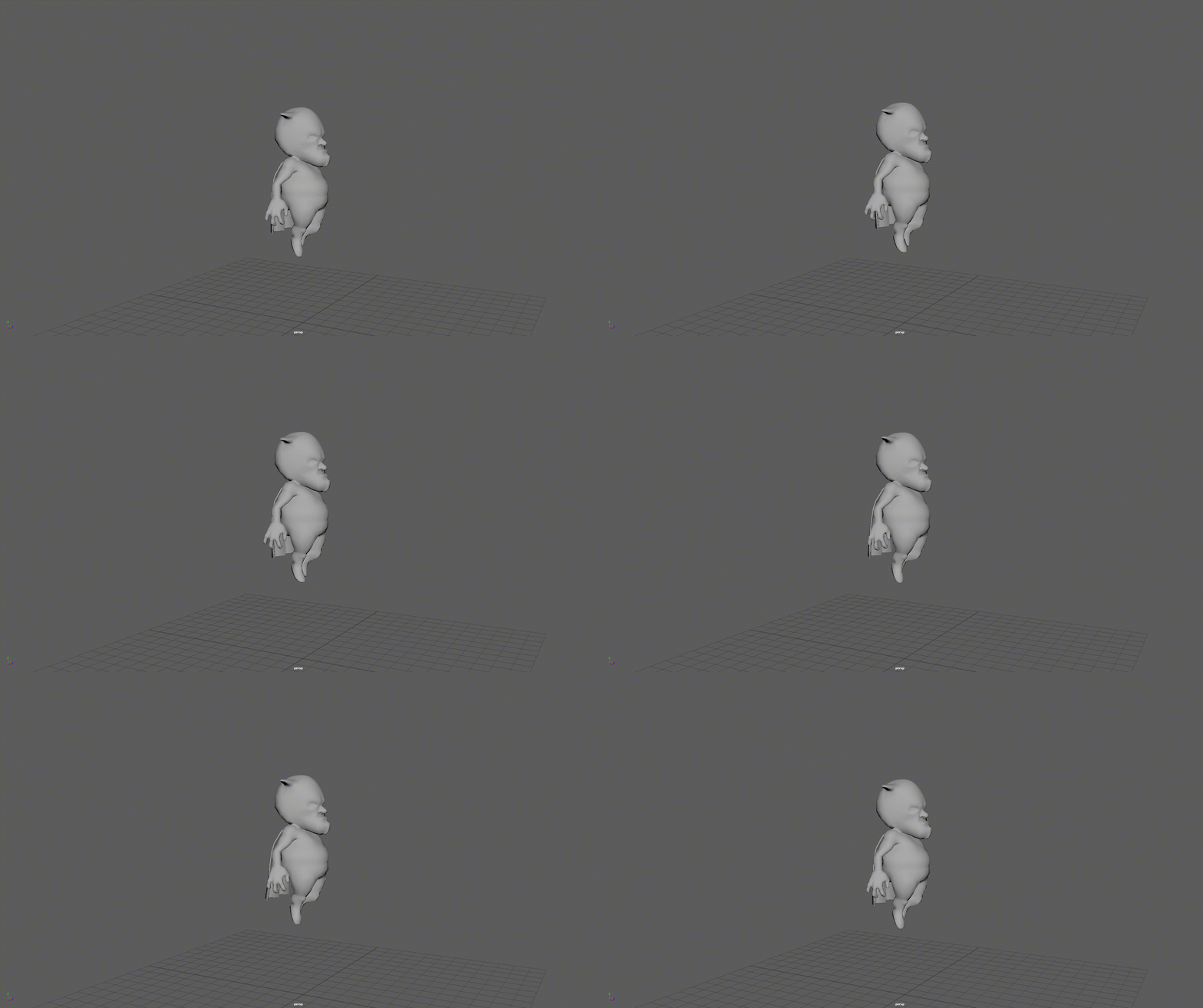
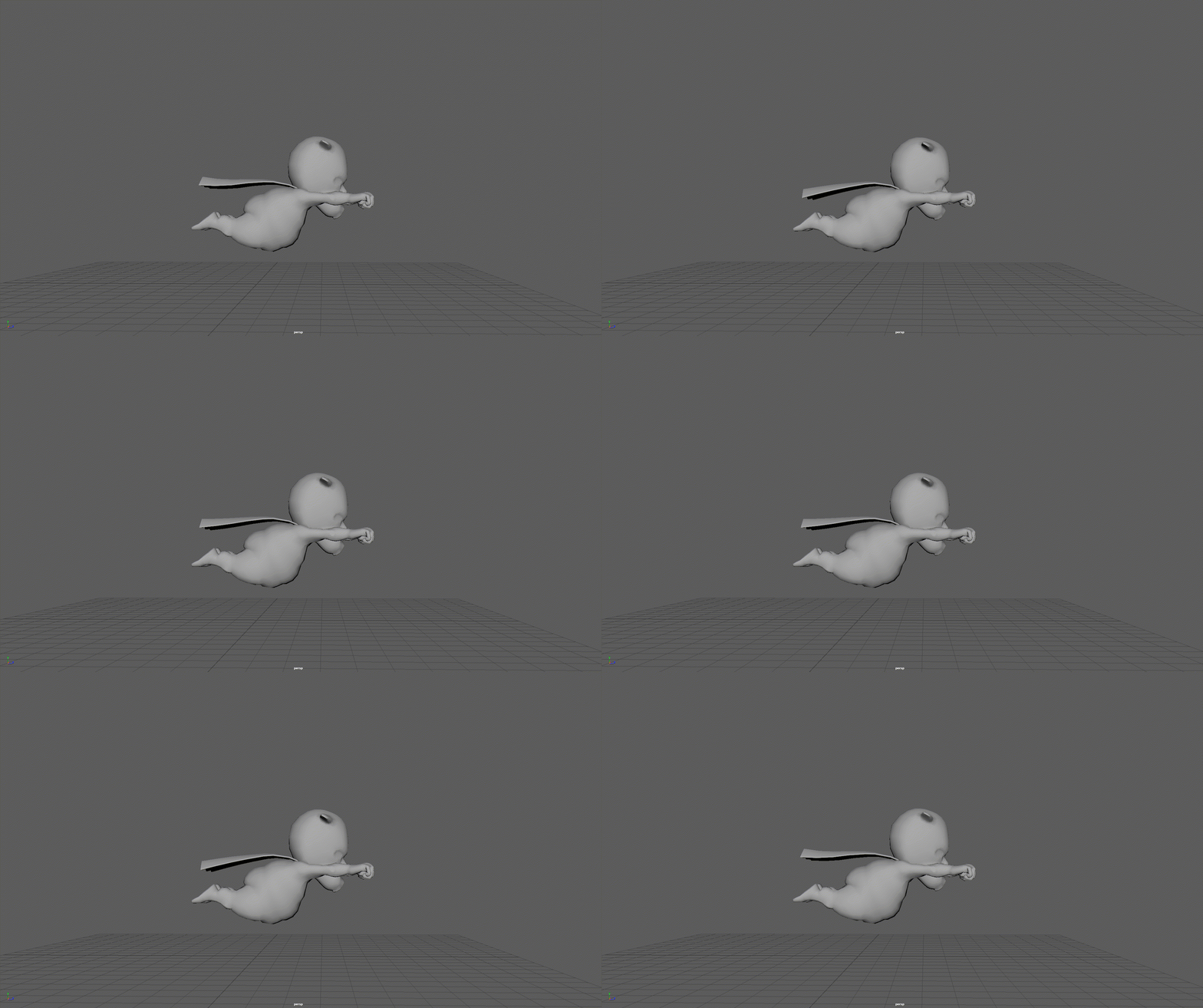
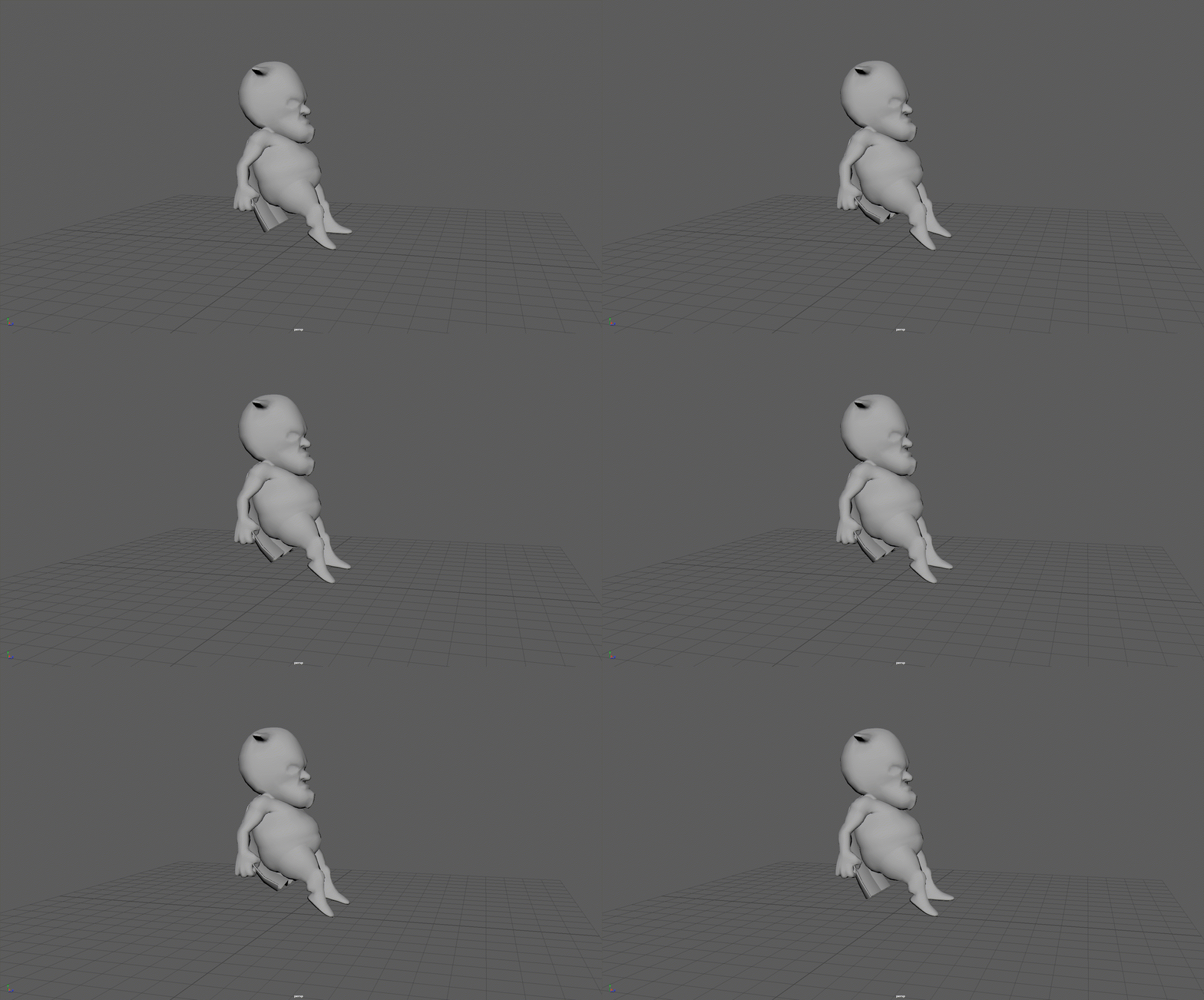
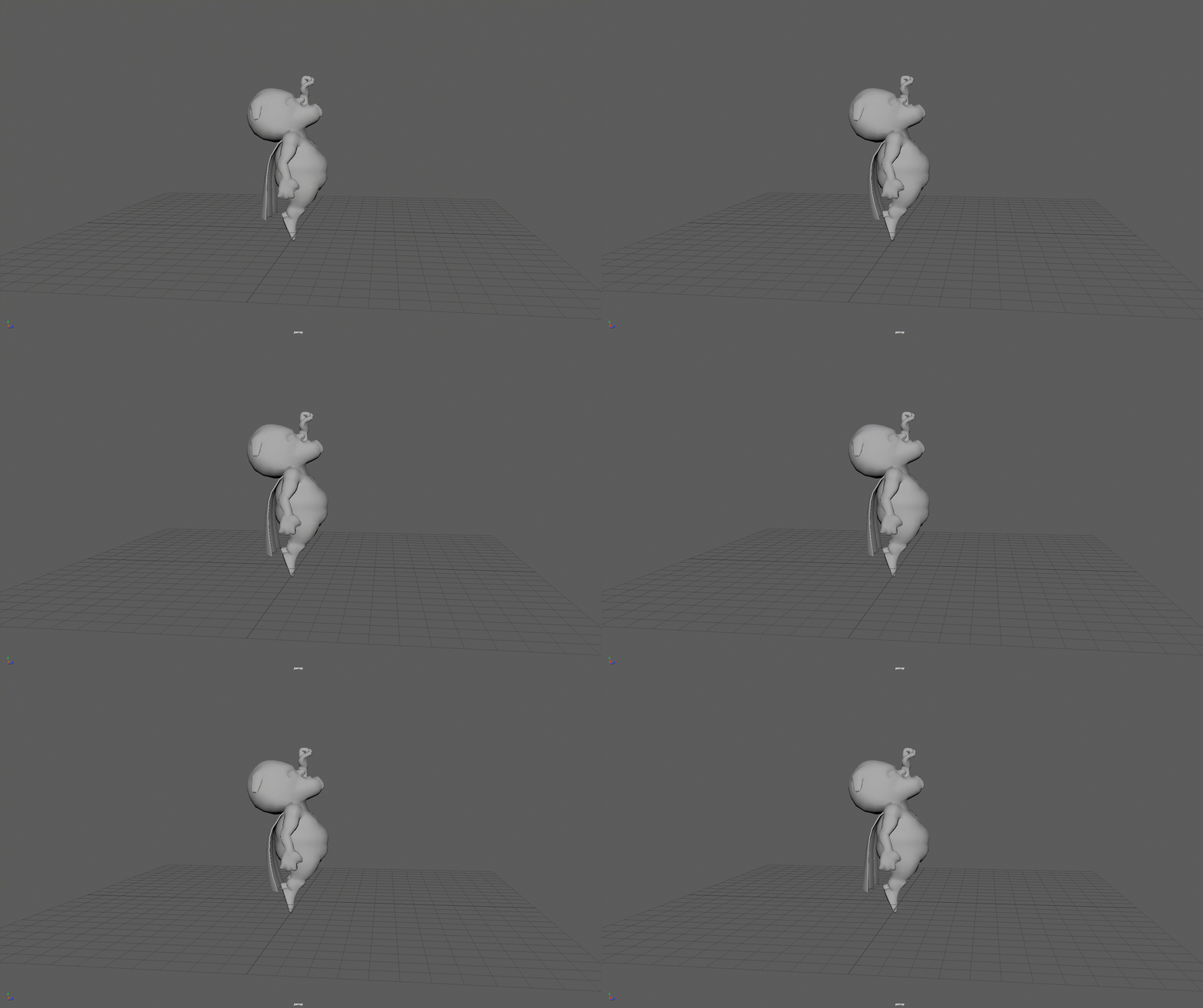
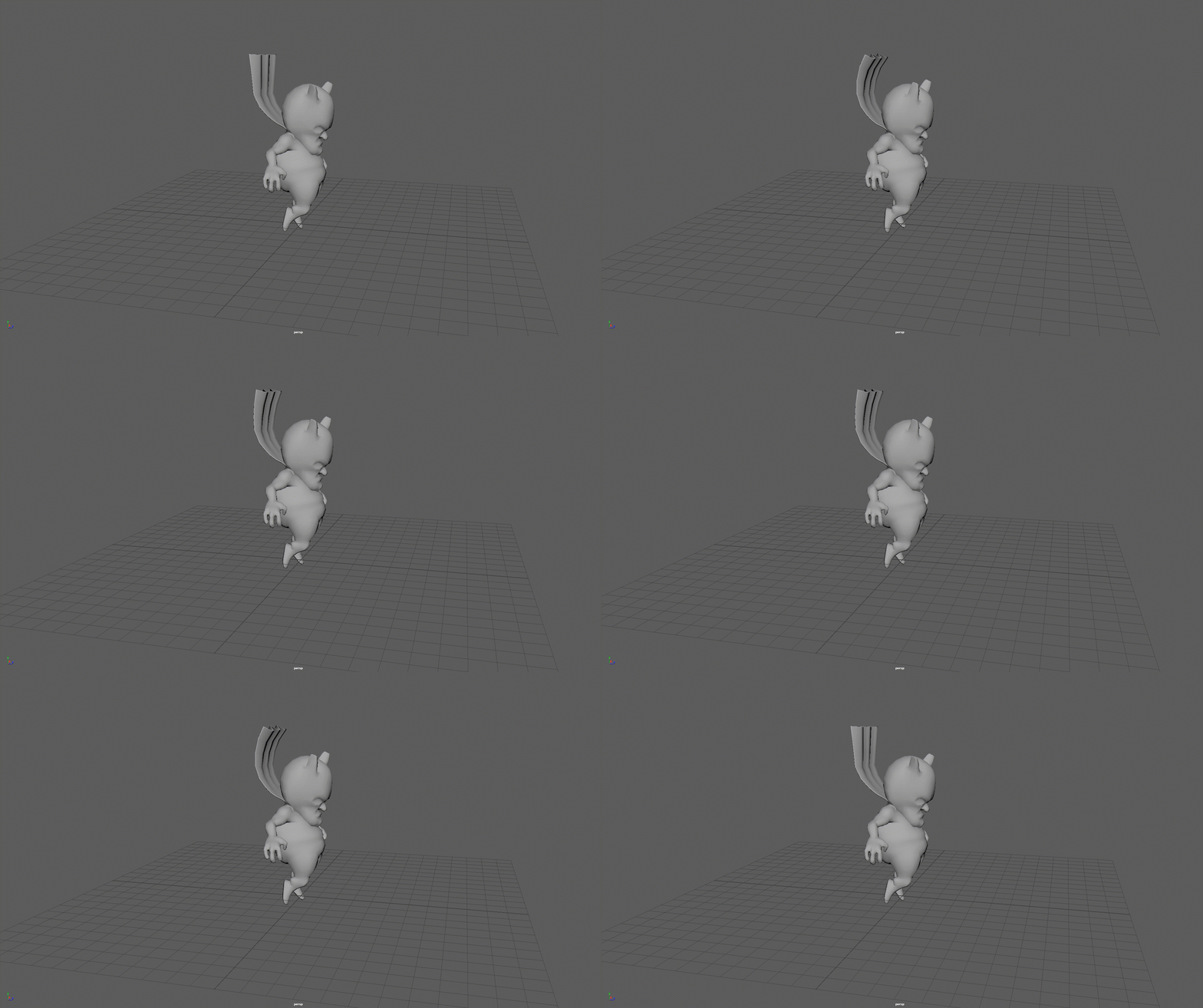
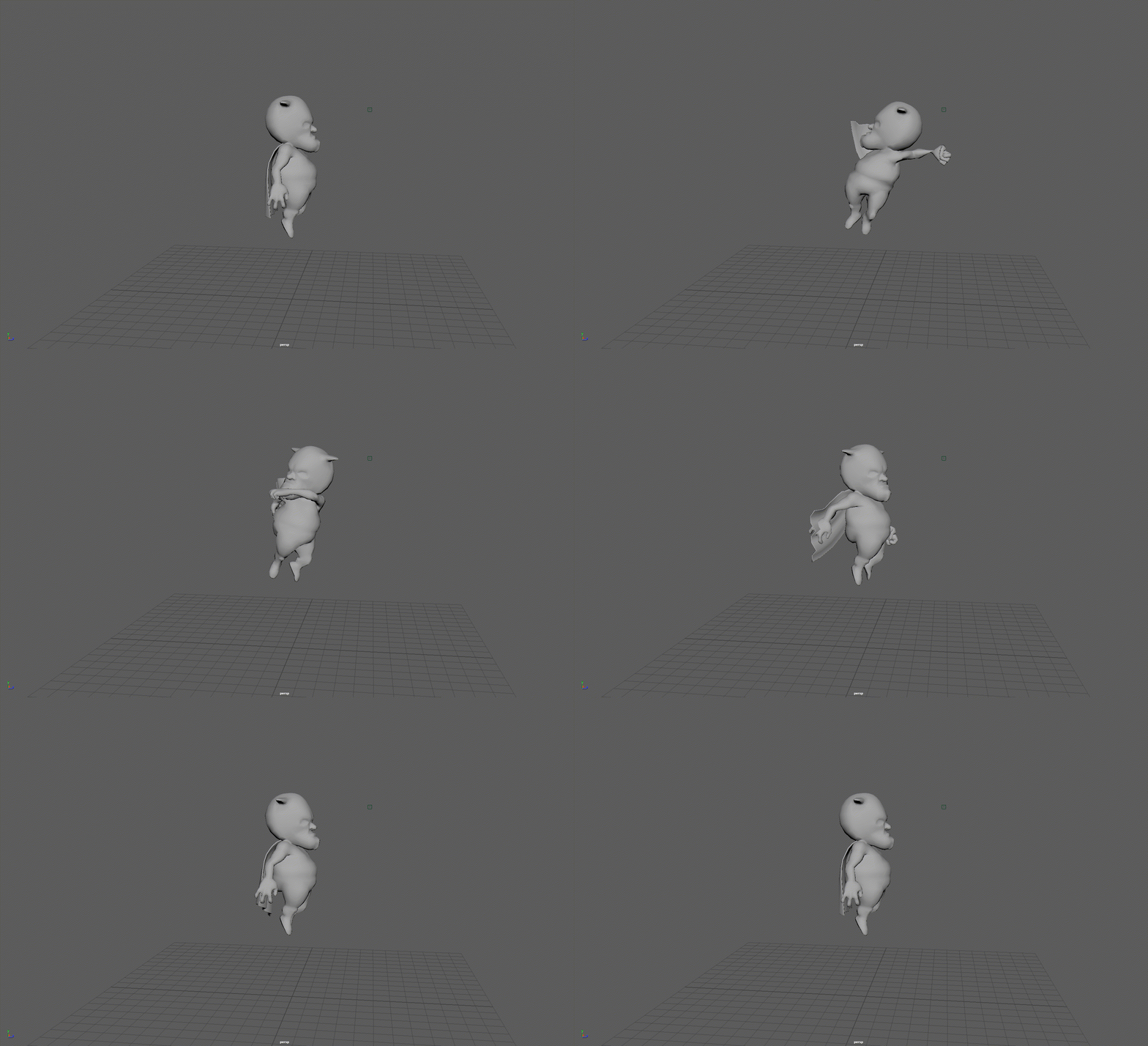
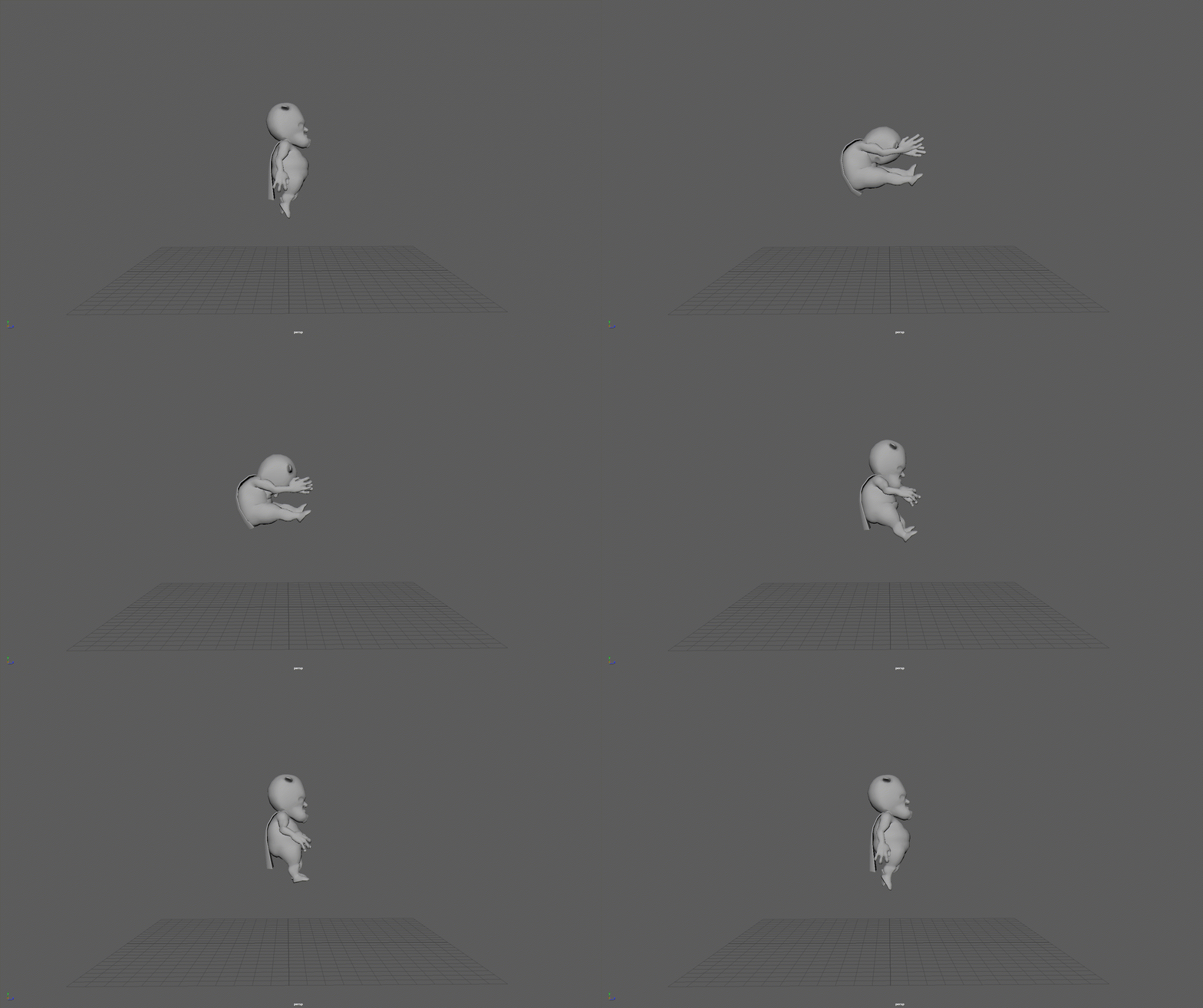
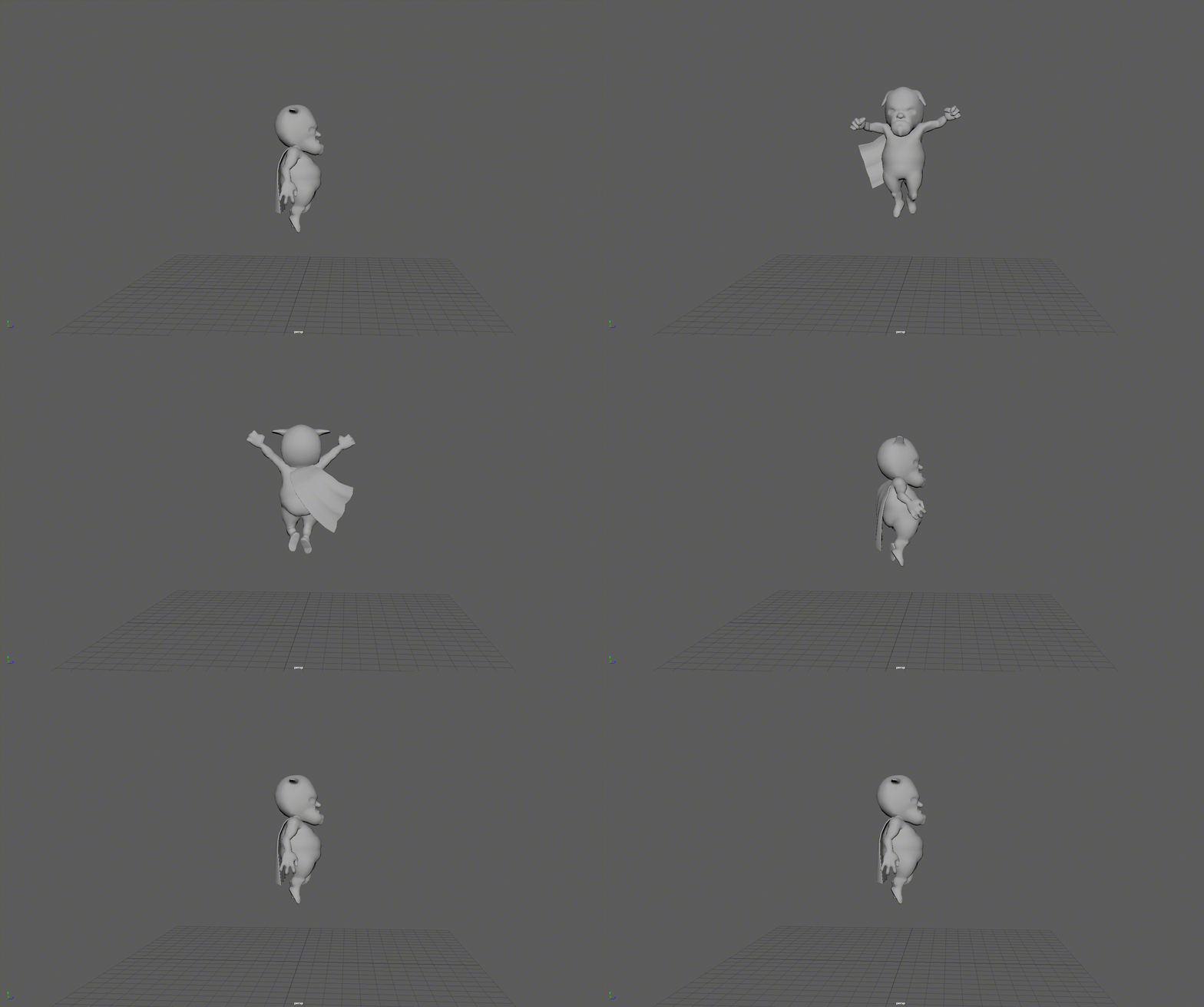
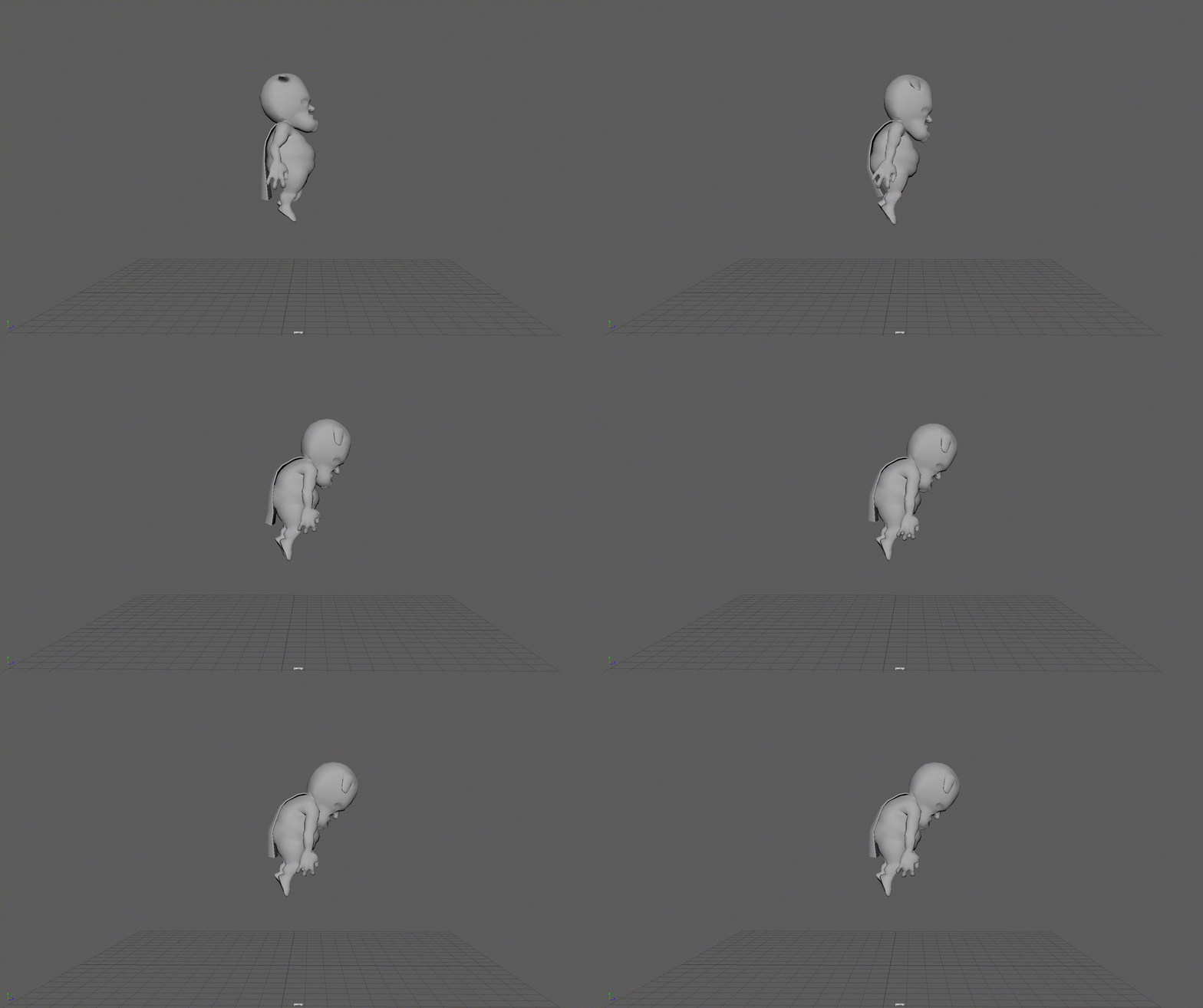
A 3-day game jam: a two-player fighting / tower-defense hybrid. My first taste of game design, and all of the hero's animations.

Animation & Game Design2021–20223 daysTeam of 7
View the project

How I workFrom concept to a level that plays

1

Research

References, constraints, what the team can actually build in the time we have.

2

Plan

Top-down layout, points of interest, the mechanic that gives the level its loop.

3

Blockout

Grey geometry in engine to feel dimensions, flow and dead zones before any art.

4

Playtest & iterate

Watch players, cut what doesn't work, add verticality or calm where the pacing needs it.

Let's build a level together.

← All projects

Project 01

Guilty or Not

Step into the role of a detective and find the thief among 12 suspects. Each time you clear two of them you unlock new documents. Every case is unique, generated by AI.

RoleGame & Level Designer
Year2023–2024 · 1 year
TypePoint & click, deduction
PlatformPC
Team3
Play on itch.io

The result

A point-and-click investigation where you eliminate suspects, unlock evidence and name the thief — with a brand-new case every time.

What I did

Defined the concept, iterated three full game concepts, designed the five in-game documents, ran playtests and tuned readability.

The key decision

Cut the interrogation phase and the pin board: one deduction loop, inspired by Guess Who?, that AI could actually generate reliably.

What I learned

Scope to what the tech can deliver, and test reading load early — the documents went from 12 to 5, and lines from 12 to 8.

My role

Develop the concept of a game entirely generated by AI, and bring it to life while keeping it engaging and enjoyable for the player.

Process

01

What can generative AI offer?

AI can generate high-quality text and images. With that in mind we chose a visual novel format, and within it one genre stood out: the detective / deduction game.

02

Research and references

We identified three families of detective games: deduction, investigation and contradiction-based. Deduction games were the easiest to pair with AI, so they became the base of our concept.

Notebook as the main toolPins and board connectionsText deduction with fill-in-the-blanks
03

First concept: interrogation + document analysis

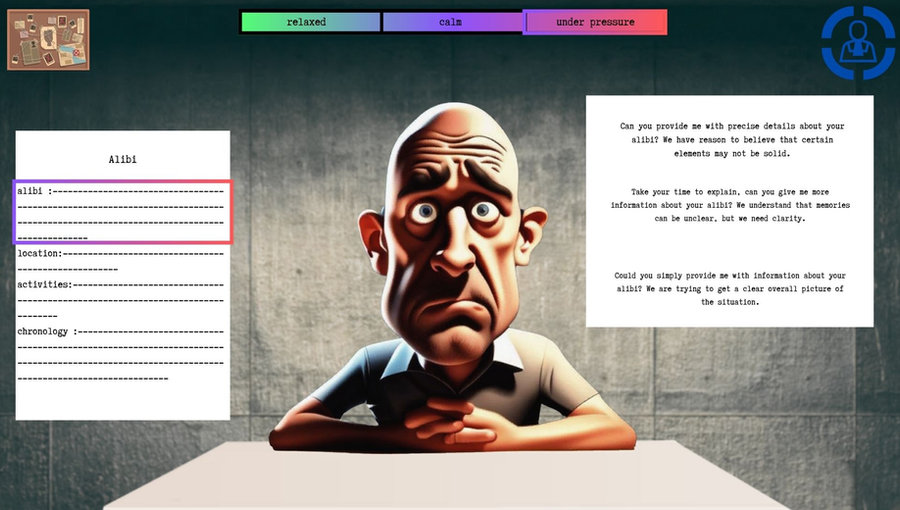
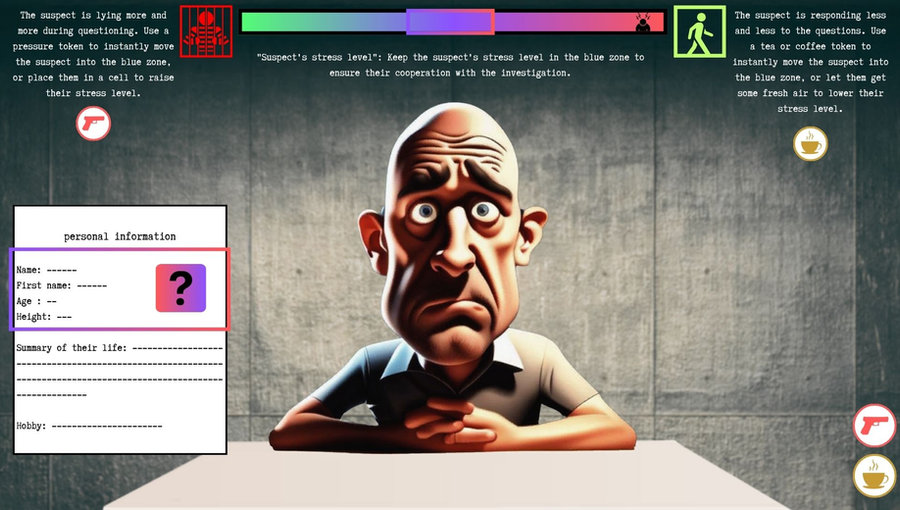
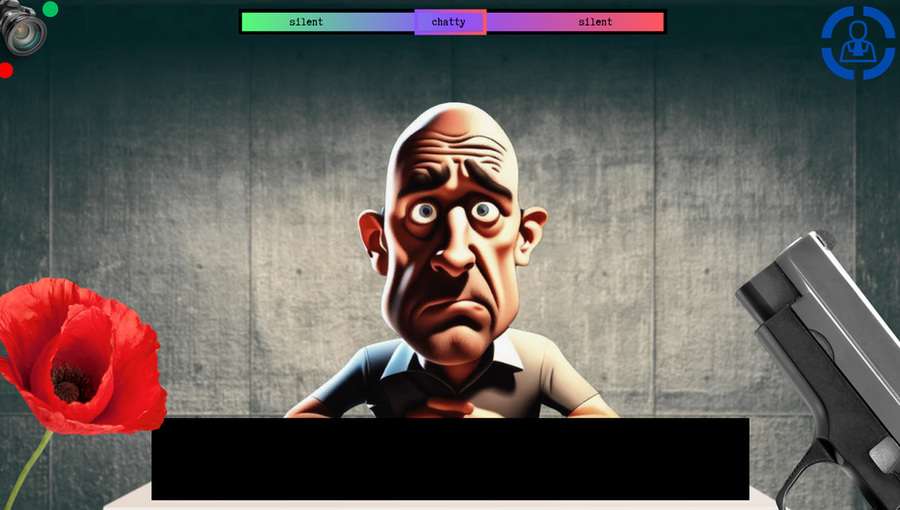
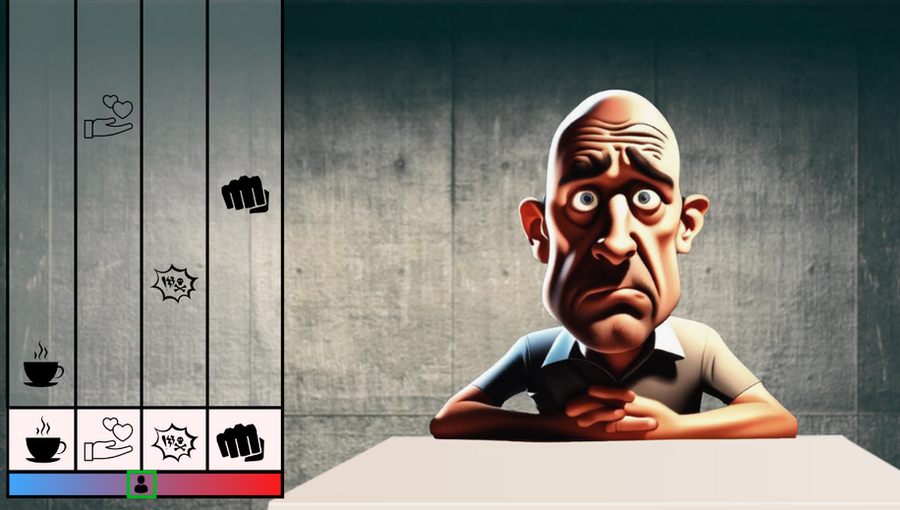
The player interrogates two suspects, fills in their files by asking the right questions, then compares reports to spot inconsistencies. I spent most of my time on the interrogation phase and went through four versions of it.

Problems

  • Suspect personality system too complex for ChatGPT
  • Question system too simple
  • Document reading long and monotonous
  • Notebook barely used; investigation risked being too long
04

Second concept: documents only

We cut the interrogation and kept document analysis, with Papers, Please as the new reference. The player cross-checks 12 documents against suspects' statements on a pin board.

Red link = inconsistencyBlue link = correlation

Better

  • Single phase, closer to the investigative vision
  • Notebook finally used
  • Suspect personality easier to convey through documents

Still broken

  • Too long per suspect
  • Pin system too complex to wire to ChatGPT
  • No difficulty curve
  • Everything on the board at once — information overload
05

Pre-final concept: "Guess Who?"

Ten suspects, a notebook, and information that unlocks as you clear suspects. We cut the documents from 12 to 5 — the player analyzes them to incriminate some suspects and clear others.

06

Designing the documents

I listed the documents that help solve a real theft case (ChatGPT first, then verified with my own research), studied real-life examples, and selected four that leave room for humor and are feasible with AI.

Criminal recordID cardInternet historyBank statement
07

Playtest and questionnaire

Before the second version of the documents I built playtest sheets for each one, then asked several players a series of questions to find what to improve.

Found

  • Too much to read and weigh — investigation too long
  • Reading monotonous and unpleasant

Fixed

  • Internet history cut from 12 lines to 8
  • Removed noise: expenses on the bank statement, conviction dates, gender on the ID
08

Typography for fast reading

The game is mostly reading, so I tested fonts: a table where each line used a different typeface, and players told me which was easiest and nicest to read. The chosen font got a slight transparency to mimic dried ink.

09

Final documents

Cleaner layouts, less noise, the dried-ink font — ready to be filled by the AI for each new case.

← All projects

Project 02

Darkest Canopy

You play a South American archer on a quest to lift the curse of an Aztec temple. Explore its depths and face formidable enemies to complete your mission.

RoleGame & Level Designer
Year2023 · 1 month
TypeDynamic TPS
PlatformPC
Team13
Play on itch.io

The result

One temple hall, four crystals, rising enemy waves — and a balcony that turns a flat arena into a vertical playground.

What I did

Designed the main level end to end: plan, gameplay loop, blockout in engine, two rounds of iteration, final layout.

The key decision

Add a balcony carrying two of the four crystals. It fixed the flatness and pushed players to chain jump and dash.

What I learned

A blockout shows dead zones no plan can: the first version had whole areas players had no reason to visit.

My role

I was responsible for the levels and the gameplay mechanics. Most of my time went into the main level, so that's the one I break down here. On the tutorial level I mostly shaped how it unfolds rather than its layout.

Process

01

Research

Building on the team's concept art, and given the one-month deadline and our priority on fun, we settled on the interior of a temple: one large square room where the whole level happens. From there I conceptualized the level on my own.

02

Plan and gameplay loop

Taking the lore and the 3Cs into account, I proposed a first layout with a simple loop that programmers could build and artists could dress cheaply: destroy crystals to deactivate the stele and end the level. Each crystal triggers an enemy wave; you can only break the next crystal once the wave is cleared, and difficulty rises with every crystal.

SteleEnergy crystalsEnemy spawnsPillarsFountainPlayer arrival
03

Blockout V1

Once the plan was approved I built the first version in engine. The blockout let me feel dimensions and the space needed for smooth, dynamic movement — and it revealed a problem: large areas of the room gave the player no reason to go there.

04

Iteration V2

Playing from the player's perspective, I spread the four crystals into the four corners to expand the playable area. It worked — but after testing, the level still felt flat. The answer was verticality, which would also exploit the character's mechanics.

05

Final version: the balcony

A balcony runs around the hall with two of the four crystals on it. The player has to climb to break them, which kills the flatness — and encourages combining jump and dash to leap off the balcony and escape enemies.

← All projects

Project 03

Space Delivery

Take a seat as a galactic food delivery driver, working for a company that tends to misplace orders during intergalactic travel.

RoleProgrammer & Level Designer
Year2022 · 3 months
TypeDie and retry
PlatformPC
Team4
Play on itch.io

The result

A die-and-retry across factories, minefields and falling debris — every trap, checkpoint and menu coded in Unreal Blueprints.

What I did

Programmed the whole game (traps, checkpoints, health, saves, keys, menus, collectibles) and assembled and tuned the level.

The key decision

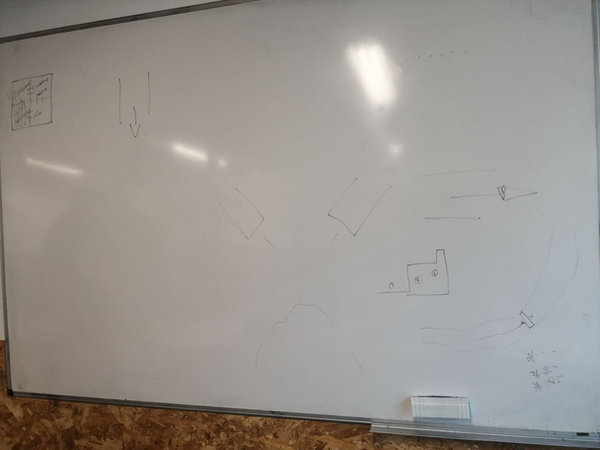
Rebuild the blockout around a tension curve: tutorial → factories → calm → minefield → calm → final gauntlet.

What I learned

In a precision game, foreground clutter and off proportions kill the feel — and empty space needs a reason to exist.

My role

I programmed the entire game in Unreal Engine with visual scripting, assembled the level design pieces, and tuned them so the game was both challenging and fun.

Process

01

Concept and brainstorming

Having used Blueprints before on a smaller scale, I volunteered for programming. To scope the work, we first listed every level design element the player would interact with — and that I'd need to code.

02

Programming and first tests

I built each element with the help of tutorials and forums, deepening my Blueprint skills along the way. We tuned the parameters on a basic blocking setup — not the final level, but enough to feel the mechanics.

03

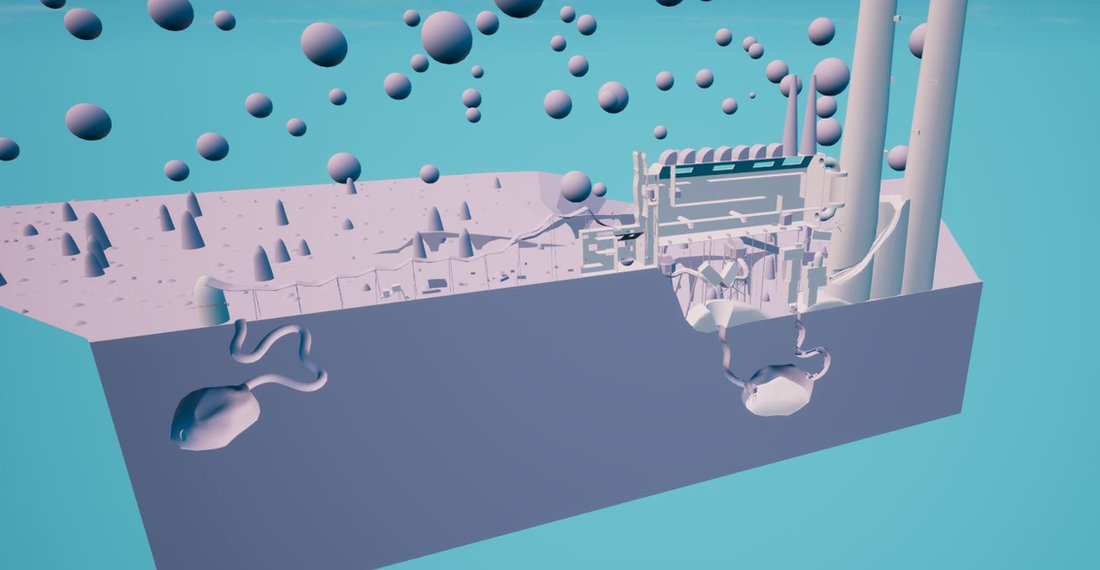
Blockout V1 and its problems

Then we tried the features on the first blockout of the real level to judge proportions, placement, length and more.

Identified issues

  • Foreground elements disrupted a game that needs precise movement
  • Some proportions made movement nearly impossible
  • Large empty spaces where players got lost, when we wanted to guide them naturally

Reflection

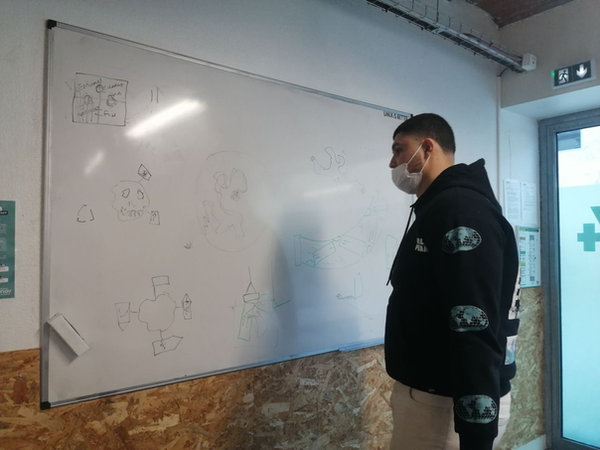
  • We regrouped around the board to design a version that matched our intentions
Blockout V1
04

Blockout V2: pacing the level

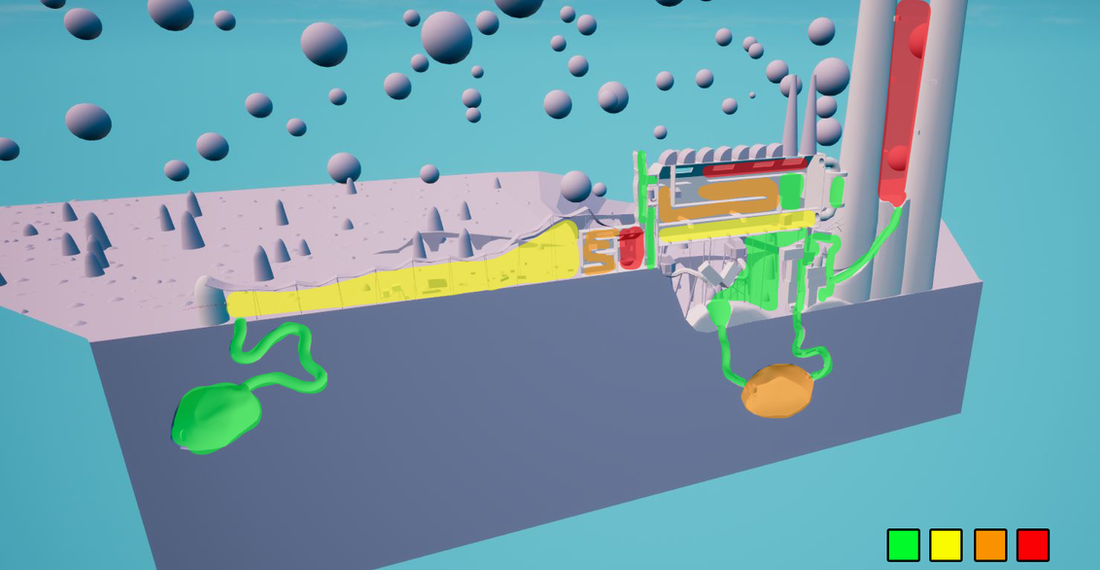
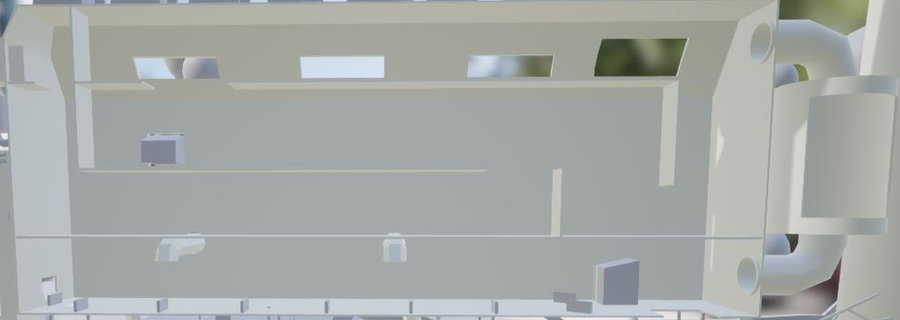
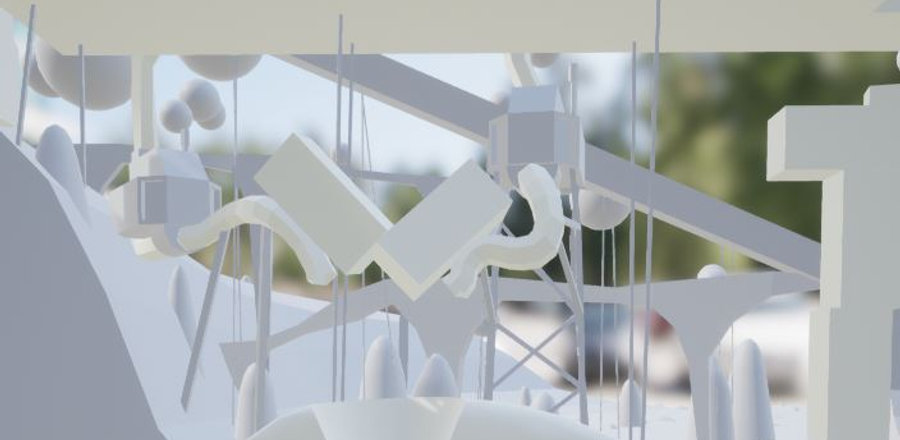
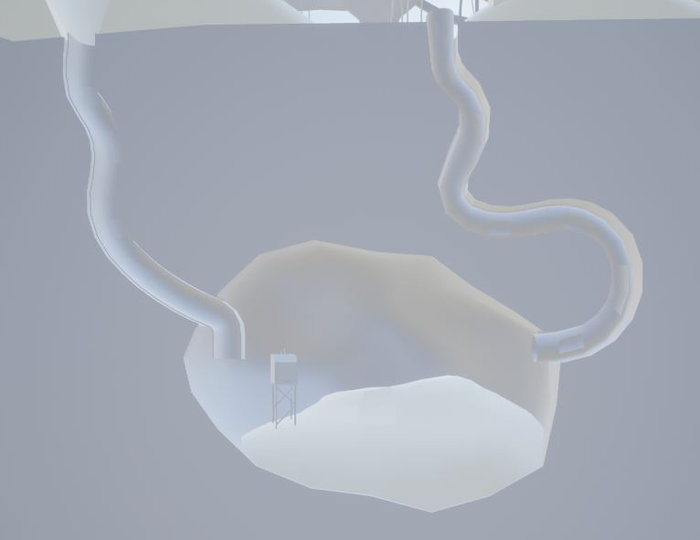
V2 guides the player subtly and balances challenge with rest. Here is the difficulty curve across the level:

Tutorial
Factories
Calm
Minefield
Calm
Falling objects
Blockout V2 overview
05

Last adjustments

Some sections changed again after feedback. I added a radioactive zone and falling objects to diversify the challenges. Beyond level elements I also programmed checkpoints, health, the save system, the key system for factory doors, menus and collectibles.

← All projects

Project 04

Granny Killer

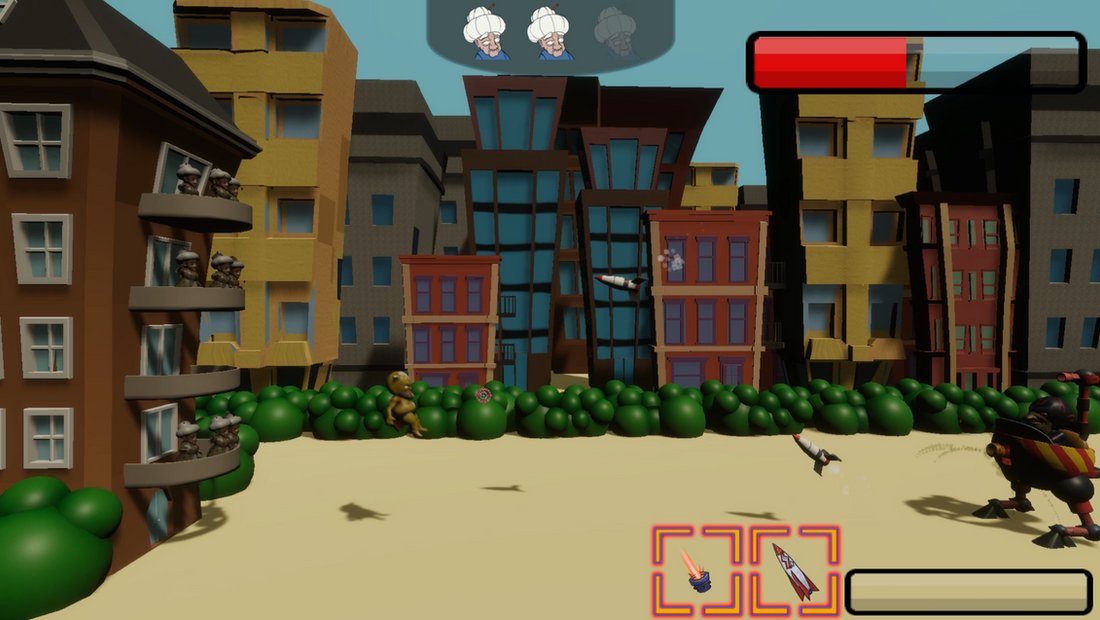
An epic one-on-one battle. A wicked, jealous villain is about to attack a hotel full of grannies — but the magnificent Super-Épade has arrived to protect them.

RoleAnimation & Game Design
Year2021–2022 · 3-day jam
TypeFighting / tower defense, 2 players
PlatformPC
Team7
Play on itch.io

The result

A playable two-player brawl in three days: one hero, one villain, a hotel full of grannies to defend.

Granny Killer in game
What I did

Brainstormed the gameplay mechanics and produced the hero's complete animation set.

Why it matters

My first hands-on game design work — the project that pulled me from 3D and animation toward design.

What I learned

In a jam, ship what's playable: not every idea fit in three days, but the animations did.

My role

In this group game jam I brainstormed the gameplay mechanics and created all the hero's animations. It was my third year of bachelor's, when we were mostly focused on 3D and animation — and this is where my interest in game design first sparked. Some ideas couldn't be developed in three days, but the animations shipped.

Animations I made

01

The hero's move set

About me

Yanis Khier

I'm Yanis Khier, a game and level designer trained at Ynov Campus Bordeaux. Video games marked my childhood — endless rounds of Bloody Roar 3 against my older brother, then Call of Duty's zombie modes, Titanfall's pilot-and-titan rhythm, Assassin's Creed's free-running cities, Arma 3's slow-burn realism.

What stayed with me wasn't just the fun. It was noticing why a level flows, why a fight feels fair, why one small detail makes a world believable. That curiosity became my job: I now build spaces that guide players without a map, and I iterate until they play right.

I'm a finisher. I see projects through, I'm exacting about the player's experience, and I've learned in kitchens and on teams that listening and clear communication get better results than being right alone.

CV

Education

2023–2024 · Ynov Campus Bordeaux

Master 2 — Video Games / Game Design

Master's project: design and development of an AI-generated visual novel, Guilty or Not.

  • Research and references
  • AI documentation
  • Concept and gameplay definition
  • Feature creation
  • Testing and iteration
  • Prototyping
  • Playtest sessions
  • Balancing
  • Project presentation
2022–2023 · Ynov Campus Bordeaux

Master 1 — Video Games / Game Design

Master's project: a dynamic TPS in an Aztec universe, Darkest Canopy.

  • Project management: tasks, planning
  • Concept and gameplay definition
  • 3Cs and skills
  • Level design
  • Signs and feedback assets
  • Testing and iteration
  • Design documents
  • Prototyping
  • Playtest sessions
  • Balancing
2019–2022 · Ynov Campus Bordeaux

Bachelor — 3D Animation & Video Games

  • 3D modeling
  • Node-based programming (Unreal)
  • 3D animation
  • Texturing
  • Rigging and skinning
  • Game / level design

Experience

Nov–Dec 2024 · full remote

QA / Game Design intern — Clever Trickster

UnityTeamworkAutonomyCommunicationDiscord
Summers 2023 & 2024 · Biscarrosse

Pizza maker — Restaurant Le Parasol

SpeedManagementCustomer relationsTeamwork
Summer 2021 · Biscarrosse

Pizza maker — Restaurant Ô Lipopette

SpeedAutonomyTeamwork
Apr 2019 – Jun 2021 · Bordeaux

Multi-skilled employee — Carrefour

CommunicationCustomer relationsAdaptability
Jan 2017 – Aug 2018 · St-André-de-Cubzac

Pizza maker — Kiosque à Pizza

ManagementCustomer relationsWorking under pressure

Hard skills

  • Game designUnity, Unreal Engine
  • Level designPlans, blockouts, pacing, iteration
  • Project managementJira, Trello, Notion
  • GraphicsPhotoshop, Premiere Pro
  • LanguagesFrench (native), English (B2)

Soft skills

  • Creativity
  • Communication
  • Collaboration
  • Problem solving
  • Adaptability
  • Time management